

Precision Cutting Technology for Uniform and Neat False Eyelash Strips
Precision Cutting Technology: Elevating Uniformity and Neatness in False Eyelash Strips
In the competitive false eyelash industry, where consumer demand for natural-looking, comfortable, and durable products continues to rise, the quality of eyelash strips hinges significantly on one critical factor: precision. Among the various manufacturing processes, precision cutting technology has emerged as a game-changer, addressing long-standing challenges in achieving uniform length, neat edges, and consistent strip quality.
Traditional false eyelash production often relied on manual cutting or basic mechanical methods, which introduced unavoidable inconsistencies. Hand-cut strips, for instance, frequently suffered from uneven lash lengths, frayed edges, or misaligned placements—flaws that directly impacted the final product’s aesthetics and wearability. A strip with even a 0.5mm length variation across lashes could create an unnatural, “patchy” look, while rough edges might irritate the user’s eyelids or cause the lashes to shed prematurely. These issues not only diminished consumer satisfaction but also increased production waste, as defective strips were often discarded.
Enter precision cutting technology, a blend of advanced machinery, automation, and intelligent quality control systems designed to eliminate these inconsistencies. Modern precision cutters, equipped with high-speed, micro-adjustable blades or laser systems, operate with sub-millimeter accuracy. For example, computer numerical control (CNC) cutting machines, programmed with digital templates, ensure each lash on a strip adheres to exact length specifications—whether for a natural “everyday” style (8-12mm) or a dramatic “volume” design (14-18mm). Laser cutting, on the other hand, offers the added benefit of sealing lash丝 (lash fibers) as it cuts, preventing fraying and enhancing durability, especially for synthetic or mink-based materials.
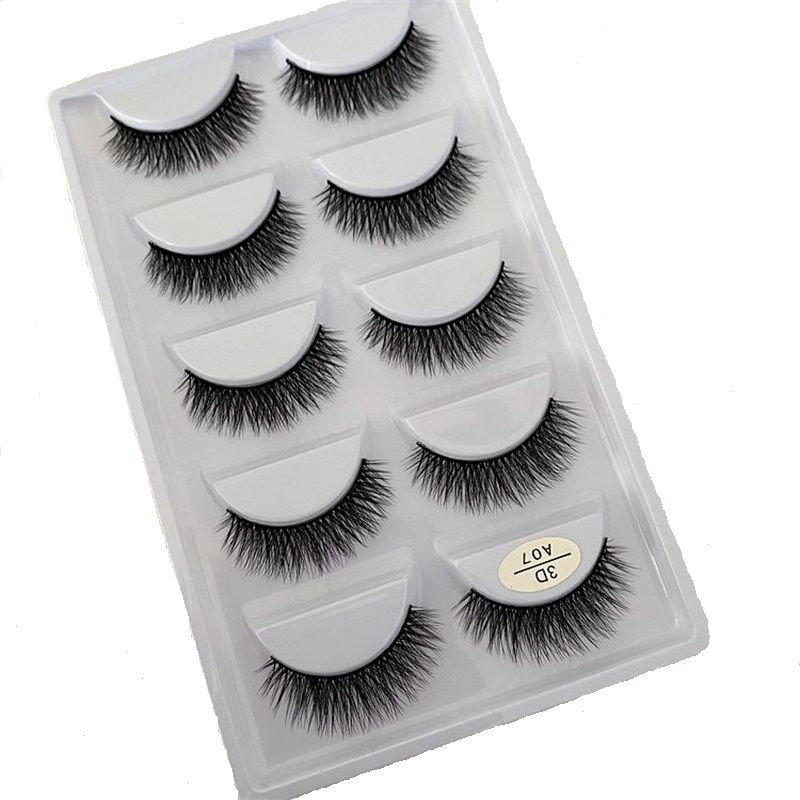
Beyond length uniformity, precision cutting technology excels in creating neat, clean edges. Traditional mechanical cutters often crushed or pulled lash fibers, leaving jagged edges that compromised the strip’s softness. In contrast, precision systems use sharp, tungsten carbide blades or focused laser beams that slice through fibers cleanly, resulting in smooth, non-irritating edges. This not only improves comfort but also ensures the adhesive bonds more effectively, reducing the risk of the strip lifting during wear.
Automation is another key advantage. Precision cutting lines integrate with feeding systems that align lash丝 evenly before cutting, minimizing human error. Some advanced setups even include AI-powered vision inspection tools, which scan each strip post-cut to detect minute defects—such as a single lash that is 0.2mm shorter than the standard—and automatically reject or rework the strip. This level of quality control has reduced defect rates from an industry average of 8-10% to as low as 2-3% for manufacturers adopting the technology.

The impact of precision cutting extends beyond product quality to production efficiency. By streamlining the cutting process and reducing waste, manufacturers can increase output by 30-40% compared to manual methods. This scalability is crucial in meeting the growing global demand for false eyelashes, which is projected to reach $12.8 billion by 2028, according to market research reports.
For consumers, the benefits are tangible: false eyelash strips that look more natural, feel more comfortable, and last longer. For brands, precision cutting technology is a mark of quality, helping them stand out in a crowded market. As the industry evolves, the adoption of such advanced manufacturing techniques will likely become a standard, ensuring that “uniform and neat” is no longer a selling point but an expectation.


